Jaguar XF V6 3.0SC. An elegant killer of its own reputation.
When someone says Jaguar, most people imagine elegance, luxury, money and a feeling of absolute perfection that makes the hairs on your arms stand up. But reality is elsewhere. It is more like a date with a gorgeous woman who after a while stabs you in the back and leaves you to bleed. And I had the bad luck of getting personally acquainted with this car’s biggest weakness. Which, unfortunately, is its engine.
Believe it or not, when it goes bang it sounds like a stone quarry, but only for a moment, then it is all over.
The problem starts in the very heart of the engine
Under the bonnet there is a supercharged V6 with a 90° angle between the banks. On paper it sounds fine; in practice it is a design that does not get on well with reliability. Because of that angle, the crankshaft has offset crankpins. Technically speaking, something like “better than poking yourself in the eye with a rusty wire”.
The crankshaft is the heart of the engine, the most expensive and most precise component. And Jaguar built this heart so that it is more at freezing point. So why didn’t they make the crank properly? Well… because of the Green Deal. Yes, you heard right. Thanks to oil passages that supply the big-end bearings with oil for only half a revolution of the engine, internal friction is reduced, and with it emissions.
The problem? For the other half of the revolution the bearings run “dry”. You can compare it to a swimming pool: either you are always under water or you are always gasping for air. Jaguar chose the worse option and the engine pays dearly for it. And no, simply raising the oil pressure, as everyone does, does not help.
When the manufacturer does not give you a chance
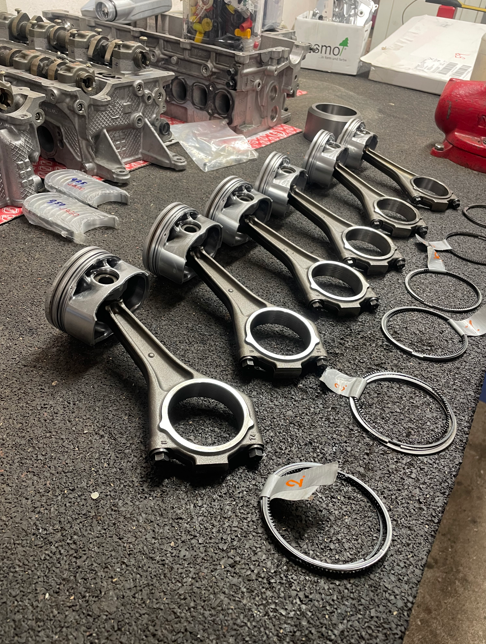
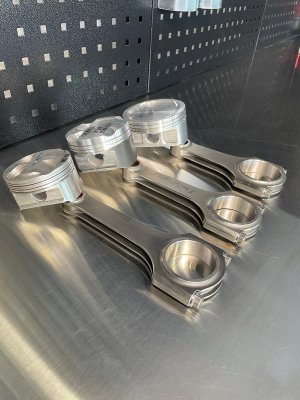
The engine seizes? It happens. Normally you would buy new parts, put it back together and drive on. But with Jaguar you find out it does not work that way. You cannot buy the crankshaft, the con rods or even just the bearings separately. All that is offered is a complete short block, of course with the same flaws, only new and for a gazillion. A marketing move worth applauding, for them, not for you.
Mechanical, yes, but done badly
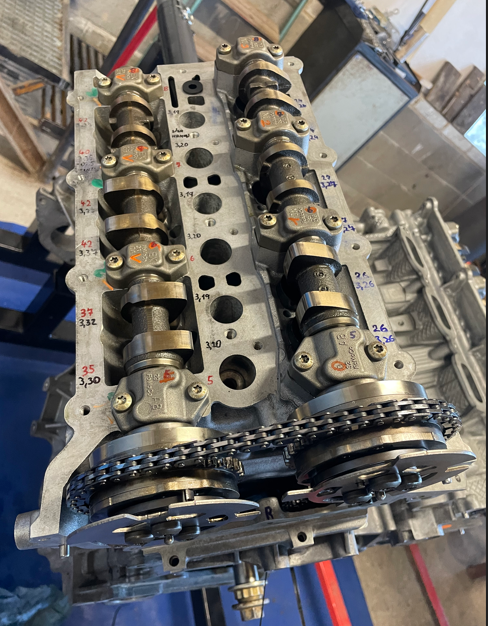
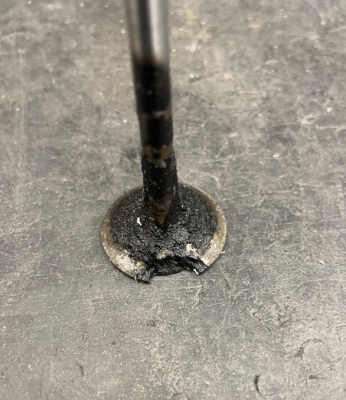
For a moment it seems we have something great here: instead of hydraulic lifters, Jaguar used mechanical buckets, which from the point of view of reliability and precision is a superb solution. But… their valve clearance is not 0.25–0.5 mm as in racing engines, but up to three times larger. The result? Ticking in the head, hard impacts and over time even the risk of a valve simply dropping. When you ask about these noises at an authorised dealership, the answer is fairly simple: "well, these engines are just a bit noisy" aha, now we know why, right?
Timing and cooling, more blows
The timing chain, the sprocket and its teeth look as if someone took them from the cassette of an old bicycle. You are amazed it does not skip all by itself. And the tensioners? Hydraulic, of course, but flimsy in design. The result is completely unreliable tensioning that can fail. And then it is just tick tick.
Plastic coolant pipes? Over time they split in half and the antifreeze happily runs out. Because why would anyone make them from aluminium straight away, right?
The biggest absurdity, no oil pressure warning light
Here comes the biggest slap in the face. The engine has no oil pressure sensor, no red warning light, nothing. In another car a warning lights up and you know things are bad. In a Jaguar? You keep driving, the engine is seizing and you enjoy the ride until the final “game over” comes. That is not a fault, that is pure horror.
How we saved it
Fortunately, not all is lost. We stripped this engine down and gave it back the dignity Jaguar did not give it.
A reground crankshaft, certain death
And then there is another thing people keep repeating: that a reground crank will not last and the engine will seize again. Nonsense. We repaired the crankshaft by regrinding both the crankpins and the main journals, and if it is done properly, it works without any problems. The whole trick is to leave nothing in the engine that could catch on the journals and wreak havoc. Big-end bearings do not run on the journal, but on an oil film. So when the engine is clean inside, has oil pressure and proper care, a reground crank will last. And whoever claims otherwise simply does not believe the facts
A reborn big cat
After all the modifications the engine came back to life. It runs like new, even better than its original brother from the factory. And above all, it makes sense.
If you have this engine, at least have the big-end bearings checked as a precaution. It is the one thing that can postpone a disaster. And then perhaps your date with a Jaguar will not turn into a bloody horror, but into a love story that is truly worth it.
And the conclusion? Do not believe internet myths. Believe facts, engineering and experience. A Jaguar has a soul, a roar and a name; you just have to take it back to the workshop now and then and clean up the mess the manufacturer left behind.
Until the next article, best regards, Tobiáš.
Follow MOTORFIX

Believe it or not, when it goes bang it sounds like a stone quarry, but only for a moment, then it is all over.
Under the bonnet there is a supercharged V6 with a 90° angle between the banks. On paper it sounds fine; in practice it is a design that does not get on well with reliability. Because of that angle, the crankshaft has offset crankpins. Technically speaking, something like “better than poking yourself in the eye with a rusty wire”.
The crankshaft is the heart of the engine, the most expensive and most precise component. And Jaguar built this heart so that it is more at freezing point. So why didn’t they make the crank properly? Well… because of the Green Deal. Yes, you heard right. Thanks to oil passages that supply the big-end bearings with oil for only half a revolution of the engine, internal friction is reduced, and with it emissions.
The problem? For the other half of the revolution the bearings run “dry”. You can compare it to a swimming pool: either you are always under water or you are always gasping for air. Jaguar chose the worse option and the engine pays dearly for it. And no, simply raising the oil pressure, as everyone does, does not help.
The engine seizes? It happens. Normally you would buy new parts, put it back together and drive on. But with Jaguar you find out it does not work that way. You cannot buy the crankshaft, the con rods or even just the bearings separately. All that is offered is a complete short block, of course with the same flaws, only new and for a gazillion. A marketing move worth applauding, for them, not for you.
For a moment it seems we have something great here: instead of hydraulic lifters, Jaguar used mechanical buckets, which from the point of view of reliability and precision is a superb solution. But… their valve clearance is not 0.25–0.5 mm as in racing engines, but up to three times larger. The result? Ticking in the head, hard impacts and over time even the risk of a valve simply dropping. When you ask about these noises at an authorised dealership, the answer is fairly simple: "well, these engines are just a bit noisy" aha, now we know why, right?
The timing chain, the sprocket and its teeth look as if someone took them from the cassette of an old bicycle. You are amazed it does not skip all by itself. And the tensioners? Hydraulic, of course, but flimsy in design. The result is completely unreliable tensioning that can fail. And then it is just tick tick.
Plastic coolant pipes? Over time they split in half and the antifreeze happily runs out. Because why would anyone make them from aluminium straight away, right?
Here comes the biggest slap in the face. The engine has no oil pressure sensor, no red warning light, nothing. In another car a warning lights up and you know things are bad. In a Jaguar? You keep driving, the engine is seizing and you enjoy the ride until the final “game over” comes. That is not a fault, that is pure horror.
Fortunately, not all is lost. We stripped this engine down and gave it back the dignity Jaguar did not give it.
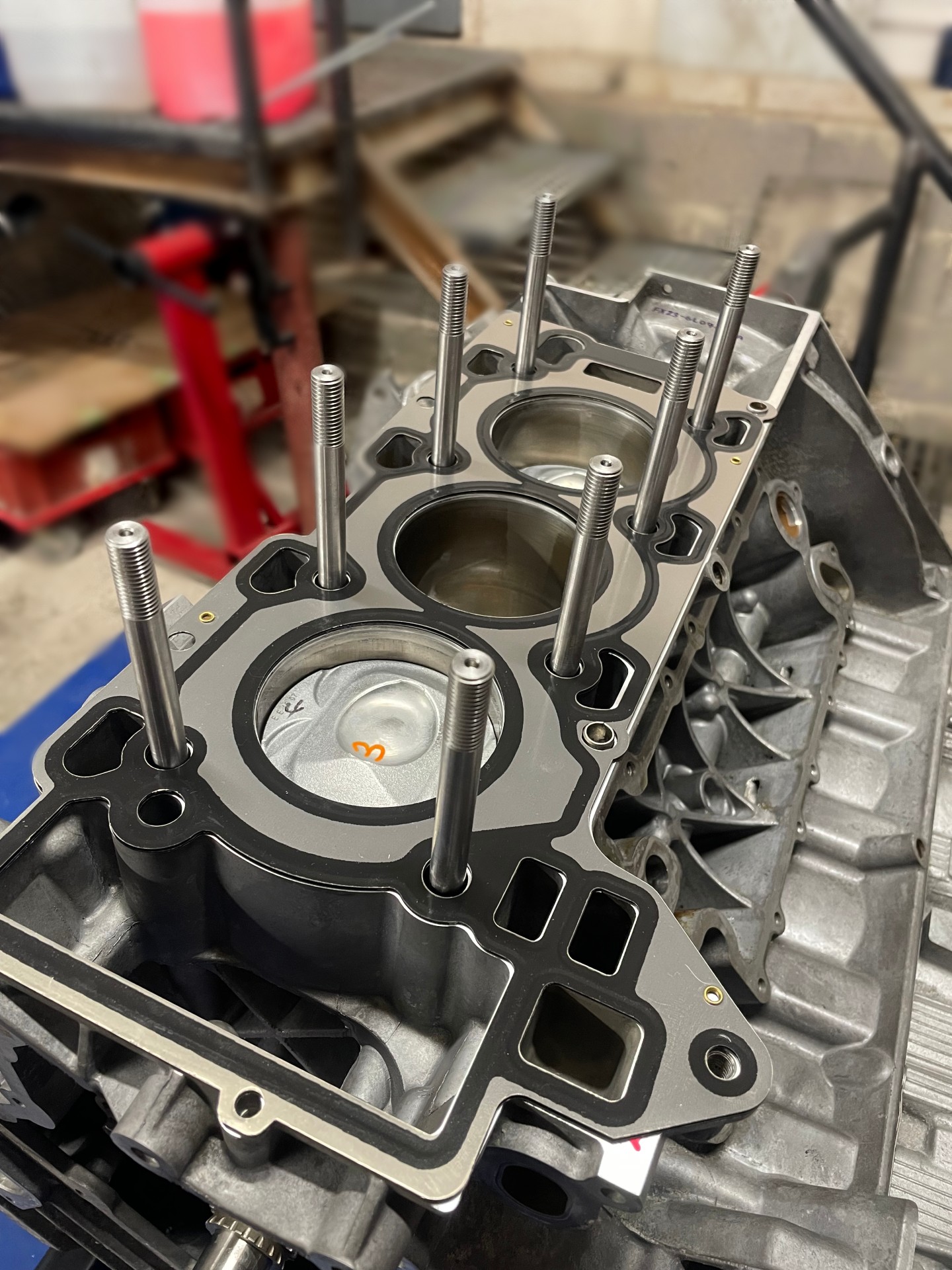
- We reworked the big-end bearings so that they are lubricated for the whole revolution, not just half.
- We mounted the crankshaft and the heads on studs with nuts for firm tightening.
- We modified the hydraulic timing tensioners so that they can never fail.
- We added an oil pressure sensor and a gauge in the cockpit, so the driver now knows exactly what the oil pressure is.
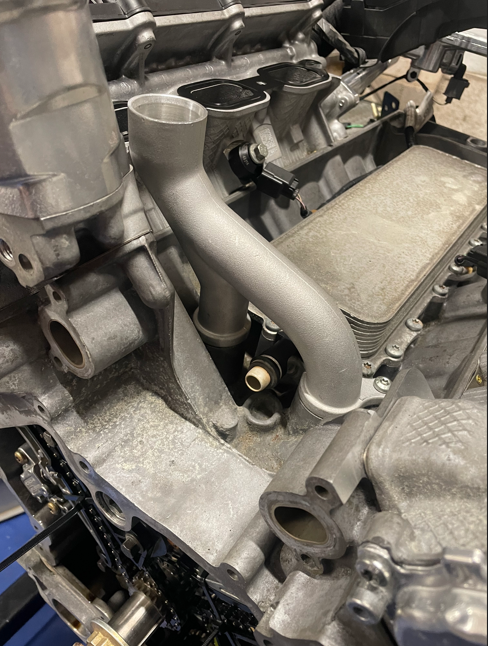
- We replaced the plastic pipes with aluminium castings that will not crack even in a hundred years.
- We reduced the valve clearances to racing values, the ticking is gone, the reliability is back.
And then there is another thing people keep repeating: that a reground crank will not last and the engine will seize again. Nonsense. We repaired the crankshaft by regrinding both the crankpins and the main journals, and if it is done properly, it works without any problems. The whole trick is to leave nothing in the engine that could catch on the journals and wreak havoc. Big-end bearings do not run on the journal, but on an oil film. So when the engine is clean inside, has oil pressure and proper care, a reground crank will last. And whoever claims otherwise simply does not believe the facts
After all the modifications the engine came back to life. It runs like new, even better than its original brother from the factory. And above all, it makes sense.
If you have this engine, at least have the big-end bearings checked as a precaution. It is the one thing that can postpone a disaster. And then perhaps your date with a Jaguar will not turn into a bloody horror, but into a love story that is truly worth it.
And the conclusion? Do not believe internet myths. Believe facts, engineering and experience. A Jaguar has a soul, a roar and a name; you just have to take it back to the workshop now and then and clean up the mess the manufacturer left behind.
Until the next article, best regards, Tobiáš.
Follow MOTORFIX